VLSI_Toolkit

Interactive chip-design tools for beginners

Number conversion, MOSFET, RISC-V, pipeline, timing and FSM tools for chip design. Free, and it all runs in your browser.

☕ Buy us a chai
Word width

About us

01 / About usSilicon University, Bhubaneswar

Free chip-design tools that show their working.

VLSI_Toolkit is a free set of tools for students and engineers who work on digital and analog chip design. It is built at Silicon University, Bhubaneswar, by two students and their faculty mentor.

Chip design work is full of small calculations that are easy to get wrong: a sign bit at the wrong width, a slack with the skew added the wrong way, a forwarding path that does not exist. Each tool here does one of those jobs, shows its working, and explains the result in plain words, so you learn the method instead of only copying the answer.

Floorplan · what is on the sitedie 1 of 1

Each block is one tool, sized roughly by how much it does. Click a block to open it.

02 / How we workthree rules

Shows its working

Every answer comes with the steps and a plain-words explanation, so you learn the method, not just the number.

Checked before every release

Every tool runs a test suite before a release. The RISC-V output is checked against a Verilog model running in Icarus Verilog, the instruction decoder is round-trip tested on 200,000 random instructions, and every night fresh random cases are checked against independent references. The install guides on the Linux page are run, command by command, on fresh Ubuntu 24.04 and 22.04 machines every night too.

Private by design

Everything runs in your browser. Nothing you type, compile or calculate is sent to a server.

The MOSFET model uses textbook equations that are listed on the page. If you find a wrong answer, please tell us on the contact page.

03 / The teamtwo students and a mentor

Pratyush Kumar Sahu

Pratyush Kumar Sahu

Idea and implementation

B.Tech, Electronics and Communication Engineering, Silicon University, Bhubaneswar (2023–2027)

Pratyush came up with the idea for VLSI_Toolkit and built it. He works on RTL design and verification in Verilog and SystemVerilog. His projects include a 5-stage pipelined RV32I processor with hazard detection and forwarding, a hybrid Radix-4/8 Booth multiplier for low-power edge AI, and RV32I core integration for the national 1-TOPS RISC-V SoC tape-out programme, where his team was selected among the top 37 of more than 550.

Achyutananda Khanda

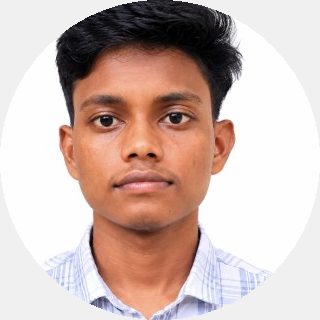
Achyutananda Khanda

Implementation and testing support

M.Sc. VLSI Design, Silicon University, Bhubaneswar (2025–2027)

Achyutananda helped implement and test the tools, bringing hands-on experience in RTL design and functional verification with Verilog. His work includes an RTL digital-twin framework for aging-aware ALUs and multipliers, published at IEEE EDKON 2026, an 8-bit mini CPU, an FSM-based traffic-light controller and a UART transmitter and receiver with parity checking.

Joy Chowdhury

Joy Chowdhury

Mentor, technical material and information

Assistant Professor, Department of Electronics and Communication Engineering, Silicon Institute of Technology, Bhubaneswar

Joy Chowdhury mentored the project and provided the technical material and information behind the tools. His research covers advanced CMOS device–circuit co-design, tunnel-FET devices and biosensors, low-power architectures, ASIC design and hardware security. He holds an M.Tech in VLSI Design and Embedded Systems from KIIT University and has submitted his Ph.D. at NIT Rourkela.

04 / Advisors and well-wishersguidance behind the project

Our esteemed advisors and well-wishers: senior academics in VLSI and electronics whose guidance and good wishes stand behind this project.

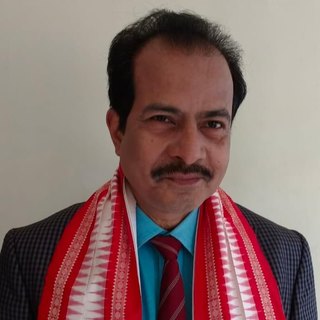
Prof. Kamalakanta Mahapatra

Prof. Kamalakanta Mahapatra

Advisor

Professor (HAG), Department of Electronics and Communication Engineering, NIT Rourkela

A pioneer of chip and system design education in Odisha. He has been a professor at NIT Rourkela since 2004, served as Dean of Academics (2017–2019) and Dean of Alumni Affairs, and headed the ECE department several times. He chairs the IEEE Consumer Technology Society, Odisha Chapter, served on the DATE 2022 Technical Programme Committee and received the J. C. Bose award in 2014 for the best engineering-oriented research of the institute.

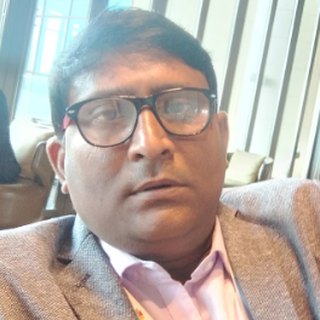
Prof. (Dr.) Angsuman Sarkar

Prof. (Dr.) Angsuman Sarkar

Advisor

Professor and Head, Department of Electronics and Communication Engineering, Kalyani Government Engineering College, West Bengal

More than 23 years of teaching and research in short-channel effects of sub-100 nm MOSFETs and nano-device modelling. M.Tech in VLSI and Microelectronics and Ph.D. from Jadavpur University. Senior Member of IEEE, Fellow of IE (India) and IETE, and former Chairman of the IEEE Electron Devices Society, Kolkata Chapter. Author of 15 books and over 130 journal papers, listed among the world's top 2% scientists (Stanford–Elsevier) and honoured with the Shiksha-Ratna Award 2025 by the Government of West Bengal.

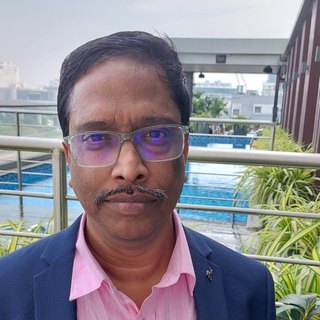
Dr. Jitendra Kumar Das

Dr. Jitendra Kumar Das

Advisor

Associate Professor, School of Electronics Engineering, KIIT University, Bhubaneswar

His work spans VLSI design, device modelling, signal processing, embedded systems and communication engineering, from CNTFET-based SRAM cell design to tunnel-FET biosensor modelling and IoT systems for 6G.

Like the tools?Buy us a chai. It keeps the site free. Found a wrong answer? Tell us.